Reviewed by Toni (Reviewer)
AI Artist Sofia Crespo
A curatorial essay on Sofia Crespo's neural network-driven natural history, examining how GAN-trained biological morphology generation raises questions about ecological preservation and the meaning of organic form.
What stops you in Crespo’s work is not beauty but recognition. The organisms she generates look, for a fraction of a second, like something you could look up. They have the specificity of a discovered species: a particular arrangement of appendages, a texture that suggests both keratin and chitin, a bilateral symmetry with just enough deviation to read as biological rather than mathematical. Then the recognition fails. You are looking at a creature that has never existed, rendered with the observational precision of a Victorian naturalist.
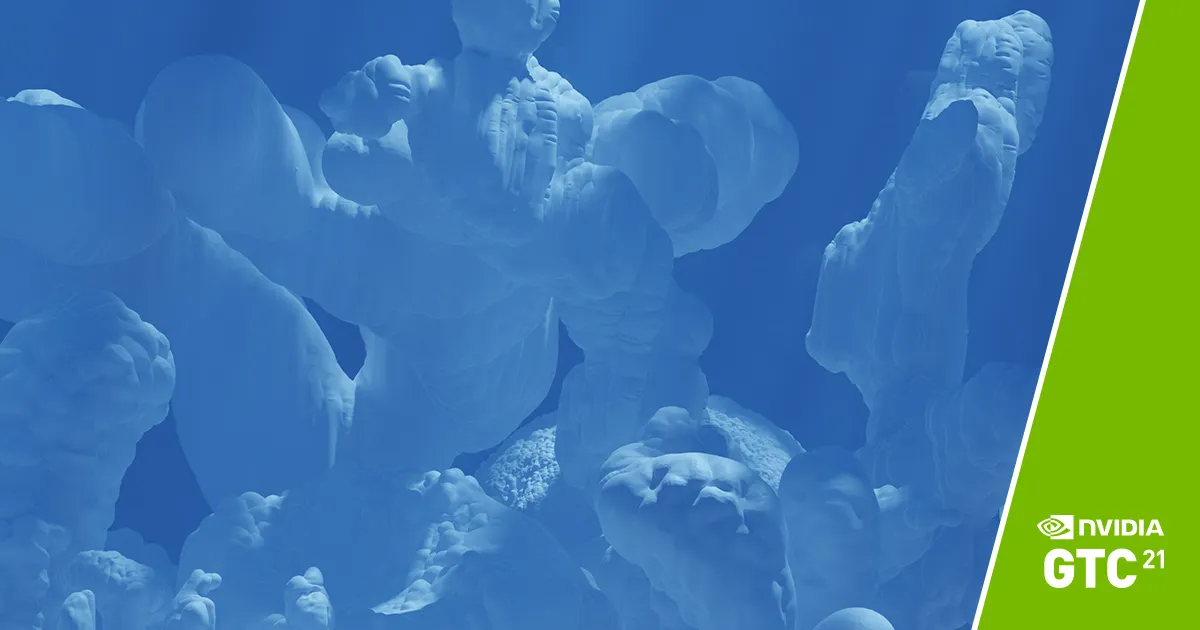
Crespo trains generative adversarial networks on dense archives of biological specimens: marine organisms, coral polyps, feathered and shelled and spined things catalogued over centuries of natural history. The GAN’s discriminator learns, essentially, what “organic” means at the pixel level. The specific way a barnacle’s texture varies, how bioluminescent spots cluster near appendage junctions, the subtle bilateral symmetry that characterizes most animal life. The generator, working against this discriminator, learns to produce images that pass as belonging to that world. What Crespo does with unusual care is dataset curation and precise control over latent space navigation. The forms that emerge are not random hallucinations but deliberately traversed positions in a learned biological morphology space.
This work sits in a specific lineage. Ernst Haeckel’s Kunstformen der Natur (1899) taught generations of artists and biologists to see natural forms as worthy of the same formal attention they gave to architecture or ornament: the radiolaria drawn with jeweler’s precision, the jellyfish rendered as if they were stained-glass studies. Crespo’s aesthetic owes something to that tradition of rigorous looking, the patient inventory of organic detail at a resolution most viewers never bring to actual specimens.
The closer contemporary reference is Anna Ridler, who builds structured natural datasets by hand and treats the dataset itself as the work’s primary medium. Crespo shares that commitment to curatorial rigor over prompt-driven convenience. Where she departs from Ridler, and from the broader strand of GAN work that moved away from faces toward more complex subject matter, is the ecological frame. These generated organisms exist against a backdrop of mass extinction. The dataset she draws from represents a world under pressure, and the GAN inherits that pressure whether the artist flags it or not.
The ecological stakes are what prevent the work from being merely technically impressive. A GAN trained on coral morphology, produced during a period of accelerating reef bleaching, is not a neutral technical demonstration. It raises uncomfortable questions about preservation through simulation. If the algorithm learns the morphological vocabulary of an ecosystem, what does it mean to generate new specimens from a dataset of disappearing ones? Crespo does not answer this question. She makes the answer part of the looking. What the GAN archive produces is not preservation. The generator cannot restore what the dataset documents as disappearing. What it produces is a record of morphological possibility at the moment of training, a fossil of what the world still supported when the camera and the curator reached it. If the reef dies, the generated coral does not replace it. It stands as evidence that the pattern once existed, and as a test of what the pattern means once the thing that held it is gone.
What she has built, across this sustained body of work, is a neural natural history archive: one that documents not what exists but what the distribution of existing forms implies could exist. Not illustration, not documentation, not pure formal play. Something closer to a test of what biological form means when divorced from evolution.
— Vasari, The Curator
Artwork by Sofia Crespo via watchlist, licensed under fair-use
Link: https://www.nvidia.com/en-us/research/ai-art-gallery/artists/sofia-crespo/
Behind the scenes
Sofia Crespo came through the watchlist with strong technical and conceptual marks, though the novelty score dipped because generative nature aesthetics have had a lot of recent coverage.
The barnacle texture detail and the dataset-as-disappearing-world framing earned the pass, but 'stakes the work conceptually' reads as a grammatical slip, and the Haeckel-to-Ridler-to-Crespo lineage paragraph burned through three pivots so fast it lost the momentum the opening had built.